Showing posts with label Brazil. Show all posts

Monday, May 17, 2010

Why are cars in Brazil so expensive?

Good article from Exame (in Portuguese) regarding the extremely high price of cars in Brazil. Some points from the article:

- Taxes, labor costs, raw materials and lack of infrastructure force Brazilians to pay double what Mexican consumers pay for the same car

- The basic model of the Honda City is sold in Brazil for the equivalent of US$ 32,000 (according to mid-May exchange rates). Considering the car's category, the price is similar to that of its competitors. Rival sedans like the Volkswagen Polo, Fiat Linea and Ford Focus cost between US$ 28,000 and $33,500. What not everybody knows is that crossing the border into Argentina, the same car with several accessories - such as electric power steering, onboard computer and dual airbags - can be purchased for US$ 20,100.

- The price difference in itself is already strange, but what makes it even harder to swallow is that both the car sold in Argentina and the one sold in Brazil come from the same production line in Sumare, located in the state of Sao Paulo. The import cost is zero for the Mercosur neighbors. The biggest explanation for the price difference is the weight of Brazilian taxes.

- Together the Brazilian taxes IPI, ICMS, PIS and Cofins represent between 27 and 36% of the total value of automobiles. For comparison's sake, in the US, taxes add up to about 6.1% of the vehicle's final price.

- The disparity suggests that vehicle produced abroad could invade Brazil. But it's a mistake to think that the tax burden offers relief to imports. Insurance, freight, and a 35% import duty are added to the price of each imported car. Next, the car collects all taxes paid on its home soil which are not charged in the country of origin. According to Abeiva, the Association of Importing Companies, the math makes it clear: by the time the car reaches the Brazilian consumer, it will cost 2.7 times its original price.

- Not only is the purchase price higher than almost every other country, but financing (avg of 25%/year), ownership, and maintenance costs also make Brazil champion of high prices.

- The government is not keen to change its tax policy because it makes so much money. In 2009, it charged over US$ 15.7 billion in taxes from autos.

- Despite the obstacles, the Brazilian auto industry is having the best times in its history. 3.4 million vehicles are expected to sell in 2010 and investment is at record levels.

- If you read this story and are willing to travel to Argentine to enjoy a delicious wine, a juicy chorizo steak and come back with a Honda city purchased at a US$12,000 discount, forget about it. To cut off this potential tax evasion, the Brazilian government prohibits the importation of any vehicle that doesn't come straight from the factory - except those used in diplomatic missions and cars over 30 years old. And you can only drive a foreign vehicle in Brazil for a maximum of 180 days. The only solution is to accept the high prices charged here.

My takes:

  • Things are even more expensive than they seem. The annual car ownership tax is 4% of the government estimated car value, which is always higher than what you think it's worth. So the owner of a domestically manufactured 2004 Toyota Corolla would pay approximately US$ 780, while the owner of an imported 2010 BMW X6 would pay over US$ 7000 in yearly ownership tax.
  • Gas is more expensive than in the US, currently costing over 5 dollars a gallon in Sao Paulo.
  • Load up at the ATM before heading out on the highway. A quick 5 hour trip from Rio de Janeiro to Sao Paulo will cost you US$ 28 each way in tolls. Credit/debit cards are not accepted.
  • It's amazing to me that Brazilians - 1) Are able to afford to drive given the tremendous associated costs, and 2) Still put up with these outrageous duties and taxes.

Bookmark and Share

Wednesday, April 14, 2010

Wednesday bullets

  • According to Exame -- Expedia, the largest online travel agency in the world, with annual revenue of over US$21 billion, is coming to Brazil. According to Exame, Expedia partnered with Brazilian agency Tour House through its subsidiary Egencia and plans for almost US$700 million in sales over the next year.
  • So which airline do you think was more profitable in 2009? Jetblue? Delta? Gol? According to a study done by Economatica, two Brazilian airlines were the most profitable in all of America - North and South. TAM was far and away the most profitable, taking home US$ 771 million, followed by Gol with profits of US$ 493 million. Southwest came in 4th place with US$ 99 million. American Airlines lost almost US$ 1.5 billion. In other words, use your AA miles soon. TAM, meanwhile, sees the air traffic growth of 18% in 2010.
  • One of my favorite Brazilian clothing stores, Richards, was purchased by the InBrands group, according to Dinheiro. The group already owns Ellus, 2nd Floor, Isabela Capeto, Alexandre Herchcovitch, and Luminosidade - which organizes Sao Paulo Fashion Week and Fashion Rio. The purchase should bring Inbrands' annual revenue from R$ 300 million to R$ 540 million.

Bookmark and Share

Tuesday, April 13, 2010

Tuesday bullets

  • Brazil is set to pass Germany and become the 4th largest auto market in the world -- behind China, the US, and Japan, according to this article at Bloomberg. Vehicle sales totaled 3.1 million in 2009 and are expected to grow in 2010. Just imagine the size of the market without the current crazy prices (result of import duties and taxes). For example, a basic 2010 Toyota Corolla in the US costs around US$16,000. In Brazil it costs the equivalent of US$35,000. This subject deserves its own article. Coming soon to a blog near you.
  • From Exame -- The social networking site for "professionals", LinkIn has already been surprisingly popular in Brazil, with approximately one million users. Now it's getting a version in Portuguese. Arvind Rajan, VP of International Affairs, believes this could lead to faster growth in Brazil. Beavis and Butthead would be nodding their heads in agreement right now, saying "Whoa. Cool. He said 'growth'. Huh, huhhuhuh".
  • From Isto é Dinheiro - What happens when you merge your retail company with the largest retailer in Brazil, get billions in stock and cash - but find out five months later that you don't really like the direction the new company is going and you don't have control of it because the legal charter says 49% next to your name? Well, if you're the Klein family, you threaten to sue so you can renegotiate the deal. That's the story with Casas Bahia - a massive retailer of affordable furniture and electronics - and the Pão de Açucar Group, which own approximately 98.3% of all grocery stores in Brazil. Ok, I might have exaggerated on their percentage of ownership, but not the rest of the story.

Bookmark and Share

Sunday, April 11, 2010

Weekend bullets

  • Earlier this week the US and Brazil appeared to tentatively resolve a trade spat that started with US cotton subsidies. Michael Grunwald at Time tells us the details of the resolution, which incredibly includes US$147 million a year from the US government to Brazilian agribusiness. As weird as that sounds, the US is paying off Brazilian agriculture companies in order to keep its subsidies to US cotton farmers.
  • Just eight years ago, Subway had a measly two stores in Brazil. But they have of goal of passing McDonalds as the largest fast food chain in the world by 2014. Through an aggressive expansion, today Subway has 408 Brazilian stores.  Exame has an interesting read (Portuguese) about how they accomplished it.
  • Brazil sent their Trade Minister and a 100 person delegation to Iran to explore business opportunities. Maybe in the vacuum of the US and other western nations, there are lots of opportunities. 
  • Delta plans to add flights from Detroit to Sao Paulo. It's surprising this route didn't exist before -- since both GM and Ford have headquarters in the two cities.


Bookmark and Share

Friday, April 9, 2010

BlackRock - Investing in Brazil

BlackRock is a global asset management firm with a Latin American fund composed of many Brazilian companies. Financial Times published a recent article explaining how the company is banking on Brazilian growth. Will Landers, the Latin American fund manager, gave his outlook on the country -- "But in Brazil the combination of the domestic growth story, with the Brazilian middle class’s purchasing power continuing to rise, and interest rates as low as they’ve ever been is compelling."

Either BlackRock is lucky or very competent (or both). Their fund has risen in value by 366% in the last five years. Their latest moves include increasing their shares in Petrobras (government controlled monopoly) and Brazil's largest privately controlled bank - Itau, which swallowed up another large competitor, Unibanco. Those sound like safe bets to me!

On a side note, BlackRock is growing tremendously worldwide - both organically and through acquisitions. Take a look at their history chart from their web site. 


Bookmark and Share

Thursday, April 8, 2010

Ford betting on Brazil

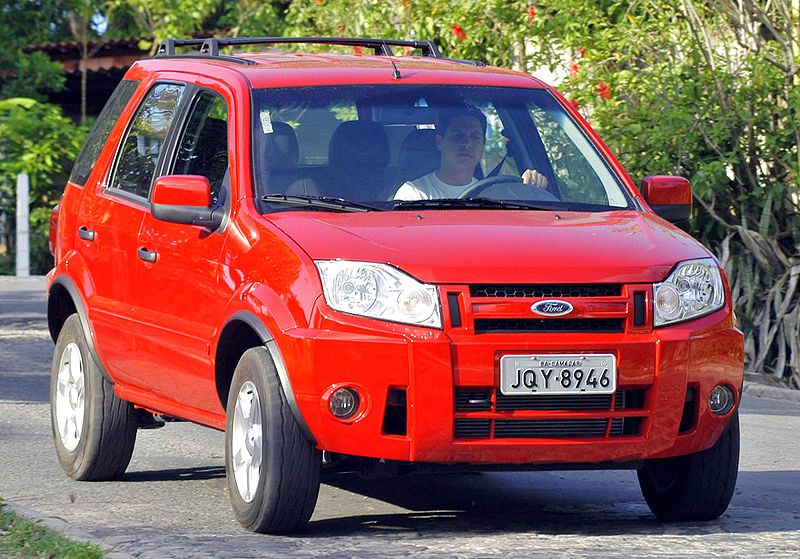
Now that the US auto market is in the dumps, car makers are desperately looking for growing markets. One of those places happens to be Brazil. The Estadão reports that the President and CEO of Ford, Alan Mulally, met with President Lula today and announced that the US based company will up their investment in the country. Over the next five years, Ford plans to invest R$4.5 billion (US$2.53 billion) in their Brazilian operation. The EcoSport, a model designed in Brazil, will be produced domestically and exported to other markets.


Ford EcoSport

Ford currently stands in 4th place in Brazilian market share for cars and light trucks behind Fiat, Volkswagen, and GM.


Bookmark and Share

Wednesday, April 7, 2010

Hyatt - economic version

After nine years with only one hotel in Brazil -- a five star hotel in Sao Paulo --, the Hyatt Hotel group will start expanding in the country. It plans to invest R$300 million (US$169 million) to open 15 hotels by 2015. Hyatt Place, geared towards the executive market, will have daily rates of approximately R$200 (US$ 113), about one third of the price its current hotel charges.

Grand Hyatt in Sao Paulo: 15 new hotels by 2015

*Article from Exame magazine, April 7th, 2010 print edition
Bookmark and Share

Monday, April 5, 2010

Monday bullets

  • Mary O'Grady of the The Wall Street Journal caused some commotion in Brazil by not agreeing with all the rosy forecasts of Brazil's economy in her article entitled "Curb Your Enthusiasm for Brazil". Despite creating billionaires like Eike Baptista, who rose to 8th place on Forbes list of the world's wealthiest individuals, she tends to believe that his story is just another example of the "same old Latin corporatism" which favors a small, select group with special ties to the government. She argues that true reform hasn't taken place and that there still exists a massive amount of bureaucracy, a stifling regulatory and tax structure, and an increase in protectionism --all which do more harm than good to small and medium-size businesses looking to grow. In retaliation for this critique, President Lula has imposed a 25% reading tax on the US based business newspaper.
  • The Folha Online reports that the Sao Paulo Stock Exchange (Bovespa) hit its highest level in almost two years today, aided by good news from the US economy. Today's closing at 71,289 points leaves it remarkably close to the all-time high of 73,516 set in May of 2008. Investment fund operators expect the Bovespa to end up between 80,000 and 81,000 by the end of the year.
  • Exame posted an interview with Karen Peetz (in Portuguese), CEO of Financial Markets and Treasury Services for BNY Mellon. Mrs. Peetz, along with the rest of investment world, is bullish on Brazil and believes it will grow more than 5% this year - regardless of this year's presidential election results.  She added, "China is always in the news, but I think Brazil is the best positioned among the BRIC countries (Brazil, Russia, India and China). It's democratic, it has a mature stock market and a reliable legal system." As a side note, I like BNY Mellon because they helped sponsor a recent American Society softball tournament.


Bookmark and Share

Sunday, April 4, 2010

Azul plans to double in size in 2010 with the arrival of aircraft

 * Translated and republished without express written consent by Veja or the National Football League

Original article in Portuguese from Veja.com --

Pedro Janot, president of Azul Airlines (founded by David Neeleman, formerly of Jet Blue), said on Wednesday that the airline plans to double in size in 2010 with the arrival of seven Embraer aircraft. According to Janot, the first of seven ordered planes arrived in March and is already in operation, bringing to 15 the number of company aircraft in activity.


The company expects to receive another six planes by the end of the year.

"The market is heating up; it grew 48% in February and 33% in January. We grew very quickly and we expect to double in size this year with the arrival of the aircraft," said Janot to journalists, after participating in a Manufacturing Federation of Rio (Firjan) event. "The company is already in the black, making a profit", he added.

Janot estimates that the Brazilian aviation market will grow this year between 17% and 20%, but said prices shouldn't go down because the companies are making up for margins lost during the global crisis. Last year, the market grew 17%, but first semester growth was basically stagnant.

Azul's occupancy rate in March, according to Janot, was 86% and the objective is to maintain this average until the end of the year. In January, the occupancy rate was 90% and in February, 87%.

The executive mentioned that the two new slots at Congonhas airport in Sao Paulo will be inaugurated in May with flights directed towards weekend tourism.

"We are planning to do tourism packages and not the filé mignon, which is the executive market. We will have connections between Porto Seguro (Bahia) and Sao Paulo," he said.


Bookmark and Share


Saturday, April 3, 2010

Why doesn't Zuckerberg pay attention to Brazil?

* Translated and reprinted without any authorization whatsoever from Dinheiro's online edition (Digital Market)

The world's largest online social network is also the fastest growing in this country. But Facebook seems like it is turning its back on one of the most attractive online communities on the planet.


By Ralphe Manzoni Jr. and Bruno Galo

The young founder of Facebook, 25 year-old Mark Zuckerberg, visited Brazil in August of 2009. He met with bloggers, launched an award for developers, talked with the press, but didn't make any important announcements. His tour through the country, however, resulted in a significant market growth. The number of Brazilians on Facebook jumped from 4.2 million to 8 million people in February of 2010.

Its main competitors, Orkut and Twitter, were stagnant in the same period. Brazil has proportionately more people accessing online communities than any country in the world, according to Nielsen Online. Of every 100 people who surf the Internet, 86 spend time in online communities. In second place Spain, only 77 people go to such communities.


In the US, the number is 74. "We won't be able to accomplish our mission if we don't succeed in Brazil", said the entrepreneur, whose fortune is worth an estimated US$ 4 billion, during his time in the country. But don't be fooled by Zuckerberg's statements. Facebook doesn't even have an office in Brazil. Even more: its advertisements are sold by a competitor.

And there is no sign that this will change in the near future. With more than 400 million registered users in the world, why does Facebook, which is the largest online community on the planet, still ignore one of the most attractive social networking markets?

The quick answer is Orkut. Google's site didn't catch on anywhere, except Brazil and India. Of every 100 people that access social networks in the country, 73 say Orkut is their favorite. It's a big barrier to entry for Zuckerberg's company. But that barrier is slowly being broken.


Google's online community is stagnant (see graph above), albeit at very high levels. Facebook, on the other hand, has been growing every month and should soon surpass the great phenomenon of 2009: Twitter. "Facebook is a great business that generates sales and publicity for companies and products. The only thing lacking now is for it to become profitable," said Luli Radfahrer, professor of digital communication at USP (University of Sao Paulo).

There is also another problem in Brazil. The way the site makes money is basically through online advertisements. And the company that sells advertisements in Brazil is .FOX Networks (pronounced "dot FOX", one of the largest international ad networks, is the online division of FOX International Channels), a News Corp. company that belongs to media mogul Rupert Murdoch. For those that don't recall, Murdoch is the owner of MySpace, another social network and Facebook competitor. Around here, .FOX Networks sells both of them. But it created a separate business unit to sell MySpace.

In the US, companies like Burger King, Honda, Johnson & Johnson and Unilever invest in the site. According to Facebook, 80% of the largest North American advertisers have already done some sort of promotional activity. "Facebook wants to build a large user base and afterwards "sell" assets related to this base," says Marcelo Coutinho,  Ibope (Brazilian Institute of Public Opinion and Statistic) consultant and professor at Fundação Getulio Vargas in Sao Paulo. "They can be advertisements, databases of people interested in goods or services, or information on people's online behavior."

The only indication that Facebook's stance may change is a classified ad in the Career and Employment section of its site which states that it plans to hire a Brazil business manager. There is no date for when this will happen. "The contract for the job is from 6 to 12 months", says the statement. Last week, Facebook announced that it will open its first office in Asia.

India, where Orkut is the leader, was the chosen site. Internationally, the social network is in Dublin (Ireland), Milan (Italy), Paris (France), Stockholm (Sweden), Sydney (Australia) and Toronto (Canada). Aren't they missing an office in Latin America?


Bookmark and Share

Thursday, April 1, 2010

Thursday bullets

  • Over 750,000 automobiles were sold in Brazil during the first 3 months of 2010, breaking the all-time record, according to this article from Milene Rios at G1. The number is almost 30% higher than the same trimester in 2009. The impressive results are due to government tax breaks of up to 7% (which ended in March), expanded consumer credit, and promotions from car makers.
  •  According to the "Impostômetro" (Tax-mometer), Brazilians have already paid R$ 300 billion (US$ 170 billion) in taxes this year, up 14.5% from last year. I'm quite confident that money will be put to good use. Oh, on second thought, maybe not.
  •  The Wall Street Journal published an interesting article written by Paulo Prado about how the future has arrived in Brazil. However, most of the article seems to focus on the obstacles the country faces in order to really make it big time. A huge government, onerous pension and benefit plans, restrictive business environment, massive underground economy, lack of infrastructure, crime, corruption and poor public education are just a few examples listed.
  • "Falling in Love with the State" is an article from The Economist regarding Brazil's upcoming presidential election and the economic lessons at stake. Brazil's economy is growing, "But there is plenty of evidence that Lula, who many expect would remain the power behind the throne if Ms Rousseff were to win, himself now believes that a bigger role for the state in the economy would be good for Brazil."